
Quick answer: Air cooling and liquid cooling are two different ways of moving heat away from a battery energy-storage system. The right choice depends on the battery system’s thermal requirements, heat load, site climate, container layout, service capability and the cooling equipment specified by the battery-system designer.
Cooltechx supplies thermal-management equipment for energy-storage applications. The final BESS architecture, battery chemistry, safety design and operating limits must be defined by the complete system project team.
How BESS air cooling works
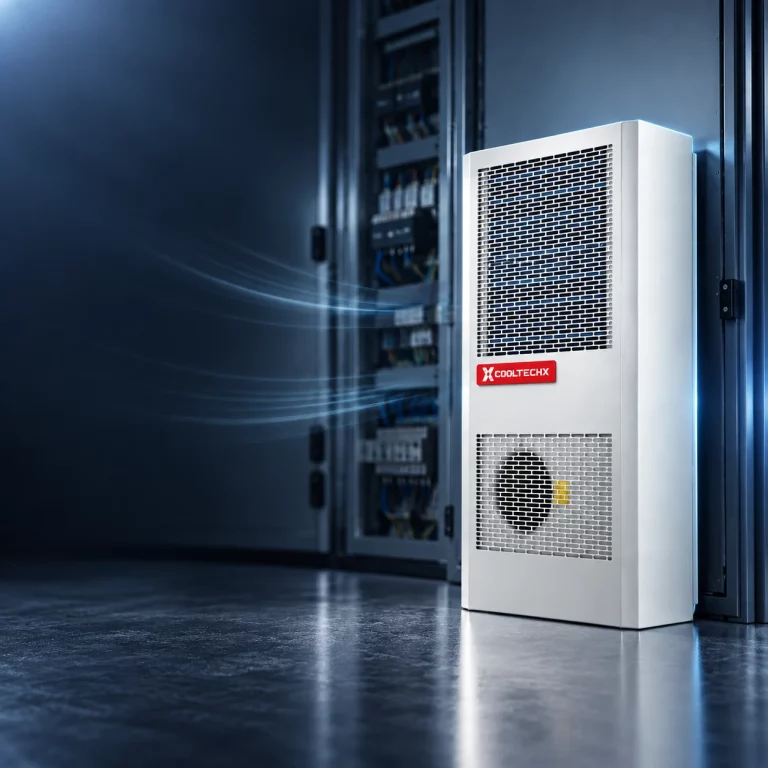
Air cooling removes heat by moving conditioned air through or around the equipment enclosure. The thermal-management design may use an air conditioner, fans, heat exchangers, ducts and controls, depending on the container or cabinet design.
It can be suitable where the battery-system design is intended for air cooling and the required heat load, installation environment and air-distribution path can be met. Selection must account for ambient temperature, dust, humidity, solar exposure, service access and the actual heat load—not simply the MWh label of the project.
How BESS liquid cooling works
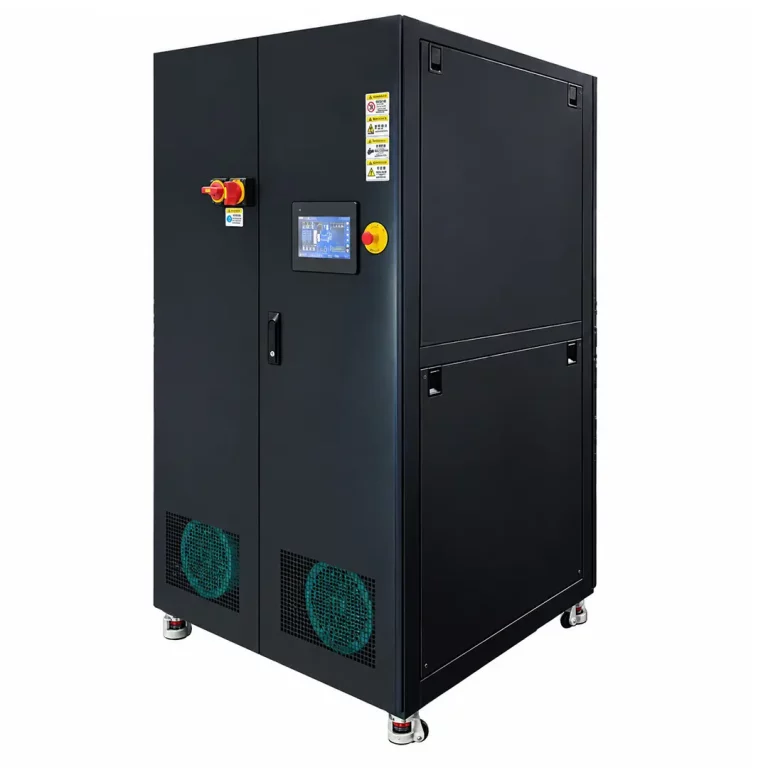
Liquid cooling circulates a specified coolant through a defined liquid loop. Heat is transferred from the battery-side cooling interfaces to the coolant and then rejected through the selected liquid-cooling equipment.
A liquid system requires project-specific checking of supply and return temperatures, coolant type, flow, pressure drop, piping interfaces, leak-management measures and service procedures. It should be selected only where it matches the battery and container thermal design.
Air cooling vs. liquid cooling: what to compare
| Decision factor | Air cooling | Liquid cooling |
|---|---|---|
| Heat-transfer path | Conditioned air is distributed through the enclosure. | Coolant circulates through the specified liquid loop. |
| Key integration check | Airflow path, air distribution and enclosure arrangement. | Coolant temperatures, flow, pressure and piping interfaces. |
| Site sensitivity | Review ambient conditions, dust, humidity and air-side installation constraints. | Review ambient conditions plus coolant, piping and liquid-loop protection requirements. |
| Service planning | Plan access to air-side components and filters where applicable. | Plan access to pumps, valves, filters, sensors and specified coolant service points. |
Five questions before selecting a cooling method
- What cooling method is specified by the battery-rack or container designer?
- What are the expected heat load and duty cycle during charge, discharge and standby?
- What ambient range and installation conditions apply at the site?
- What space, electrical supply, monitoring and service access are available?
- For liquid cooling, what coolant temperatures, flow, pressure and protection requirements apply?
Do not decide from a generic capacity or cost claim
There is no universal project-size, climate or chemistry threshold at which one method is always better. Compare the candidate equipment at the project operating point, using the thermal requirements supplied by the battery and container system designer.
For liquid-cooling quotations, use the operating-point checklist in BESS Liquid Cooling Capacity: What to Compare. It covers rated capacity, ambient condition, coolant temperatures, flow, pressure capability and electrical input.
Cooltechx cooling equipment for energy-storage applications
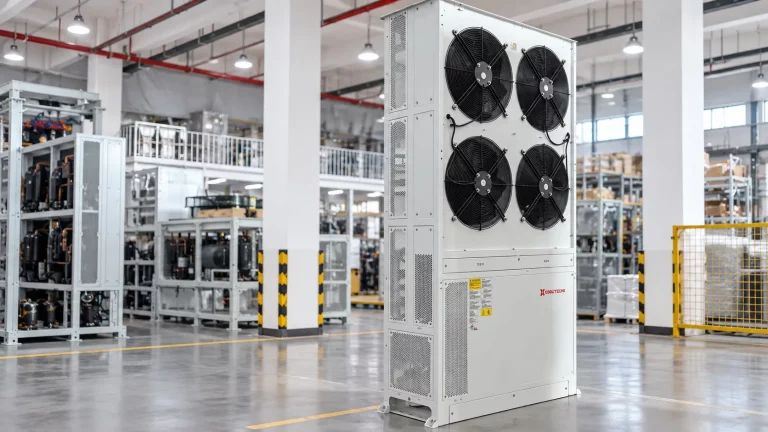
Explore the current energy-storage cooling range, including air-cooling systems and liquid-cooling systems. Product selection should be checked against the actual project load, operating point and integration requirements. For a project using a battery-side coolant loop, review the 15–70 kW BESS liquid cooling chiller series and compare its model specifications at the required duty point.
Need help comparing the thermal-management scope? Contact Cooltechx with the BESS thermal requirements, site conditions and intended cooling architecture.
FAQs
Is liquid cooling always better than air cooling for BESS?
No. The correct choice depends on the battery-system design and the project conditions. Both must be evaluated against the specified thermal and integration requirements.
Can a cooling-equipment supplier choose the BESS architecture alone?
No. The battery, container, PCS, controls, safety design and cooling equipment must be coordinated by the complete project team.