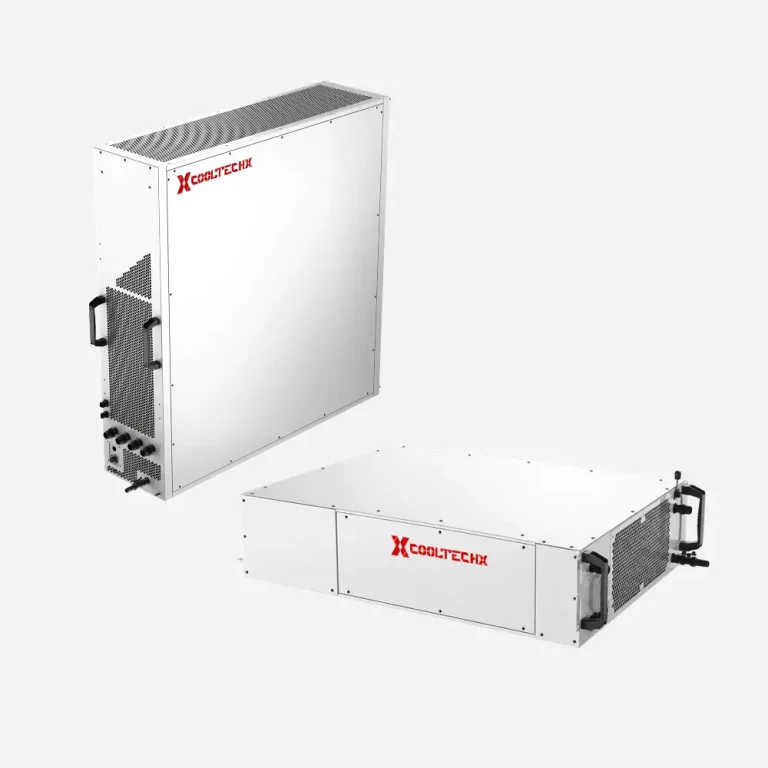
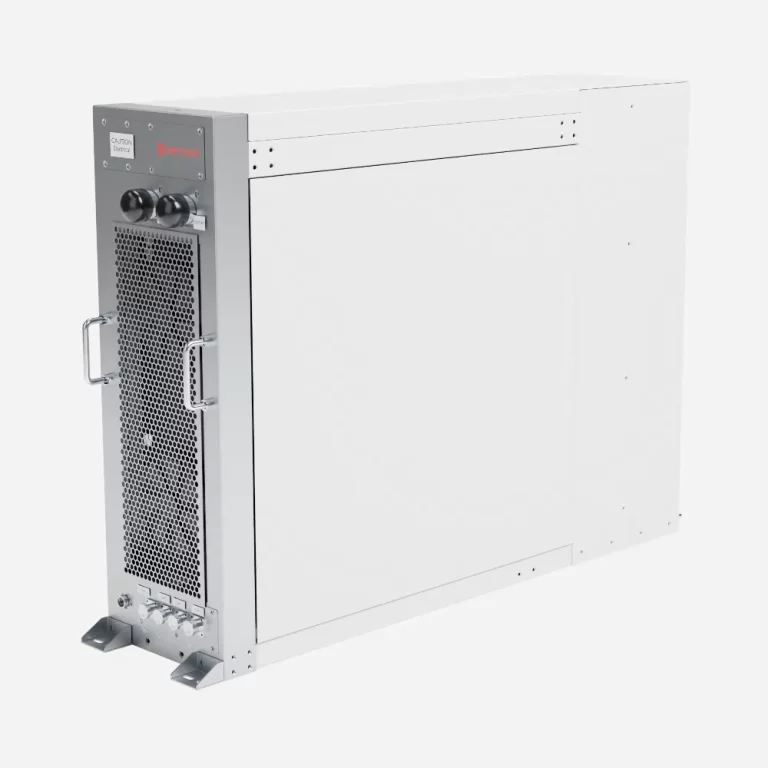
Liquid-cooling equipment for commercial and industrial battery cabinets and compact energy-storage systems, with a focus on installation space, coolant interfaces and site integration.
Don't hesitate to contact us
| Project input | What to verify | Why it matters |
|---|---|---|
| Heat load | Battery heat losses and charge/discharge duty | Cabinet energy capacity alone is insufficient for chiller selection. |
| Installation | Horizontal or vertical layout, dimensions and maintenance clearances | Choose the mounting format around the battery-cabinet design. |
| Hydraulics | Coolant, flow, pressure drop and connection details | Match the unit to the complete battery-side loop. |
| Site conditions | Ambient range, noise requirement and equipment location | Confirm performance and installation suitability for the actual site. |
| Electrical and controls | Power supply, BMS interfaces and alarms | Define the integration boundary with the battery-system supplier. |
Build a comparable cooling brief from the real operating conditions and installation layout.
Use battery-system heat losses, operating duty and target coolant temperatures. Identify all loads within the cooler’s supply boundary.
Compare horizontal and vertical installation around available space, piping, airflow for heat rejection, removal paths and service clearances.
Coordinate power, controls, coolant connections, condensate or freeze-protection scope and any site noise requirements with the integrator.
Compare BESS chiller capacity at a defined ambient and coolant operating point.
Review when separate liquid loops may be appropriate for different thermal loads.
Practical answers before equipment selection.
No. Use the actual thermal load and coolant operating conditions, then confirm installation and system interfaces.
Choose around cabinet space, piping routes, heat-rejection clearances and service access. Installation direction alone does not establish cooling capacity.
Only if the selected configuration and connected loads are compatible. Define temperature, flow and control needs for each load.
No. Confirm the available site supply and the selected model’s electrical requirements.
State the required assessment position and operating condition, together with the site limits. Confirm documented model performance rather than relying on a generic low-noise label.

Send cabinet drawings, heat loads, duty cycle, site conditions, coolant requirements, power, BMS interfaces and maintenance constraints.
Share your project requirements with our engineering team.