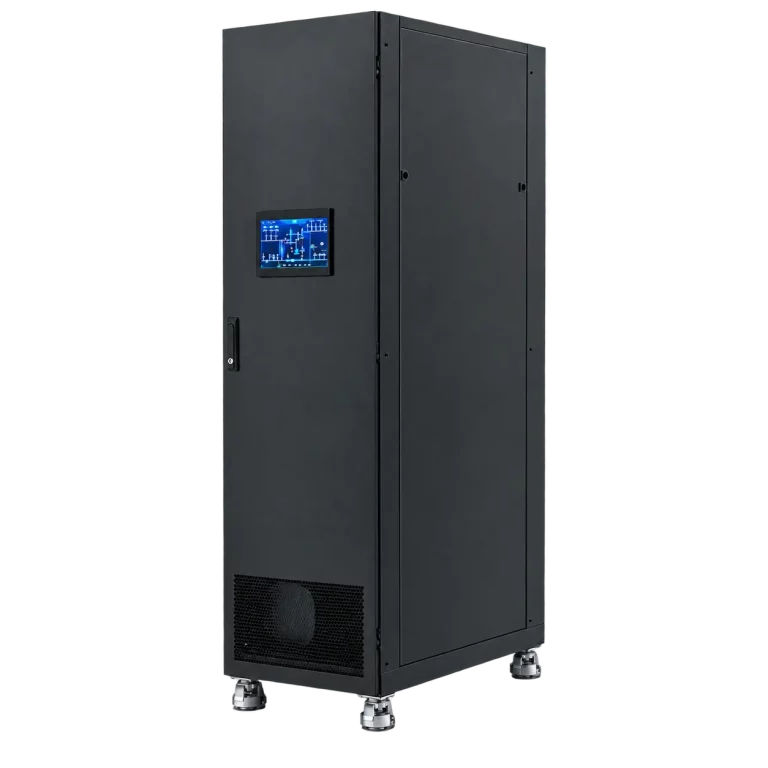
Rack-mounted, in-row and room-level liquid-to-liquid CDUs for facility and IT cooling-loop integration.
Don't hesitate to contact us
| Project input | What to verify | Why it matters |
|---|---|---|
| Facility supply | Available water temperatures, flow and pressure | The upstream system determines the heat-transfer boundary. |
| IT-side requirement | Coolant specification, temperature and flow | Match server and manifold requirements. |
| Hydraulics | Allowable pressure, pressure drop and loop volume | Coordinate pumps, piping and protection requirements. |
| Installation format | Rack, row or room-level location | Check rack space, piping routes and service access. |
| Controls and service | Monitoring, alarms and project service strategy | Verify model-specific functions and integration scope. |
Define the project conditions and interfaces before comparing equipment.
Provide facility-water conditions and the IT-side load, coolant and temperature requirements.
Review rack, row and room-level arrangements against the layout, hydraulic scope and available service space.
Coordinate power, communication, alarm signals, filling, cleanliness and the project’s service requirements.
Understand the boundary between facility cooling and the IT-side coolant loop.
Review how rack, row and room-level CDU arrangements affect integration.
Practical answers before equipment selection.
It transfers heat between the IT-side loop and the facility loop. Suitable upstream heat-rejection or cooling infrastructure is required; confirm the complete system boundary.
Their locations change rack-space use, piping scope and service arrangements. Select the form factor together with the hydraulic and facility design.
No. Coolant compatibility and cleanliness requirements depend on the selected equipment and IT-side specifications. Confirm the actual fluid requirements.
No. Heat transfer depends on the stated fluid temperatures, flow and other rating conditions. Compare at the project operating point.
This catalogue describes cooling equipment. Confirm the exact supply boundary, supporting equipment and integration responsibilities for the selected product.
Share the facility supply and return conditions, it heat load and coolant specification, required flow and differential pressure and relevant drawings. The team can check the available configuration against the actual project requirements.
Share your project requirements with our engineering team.