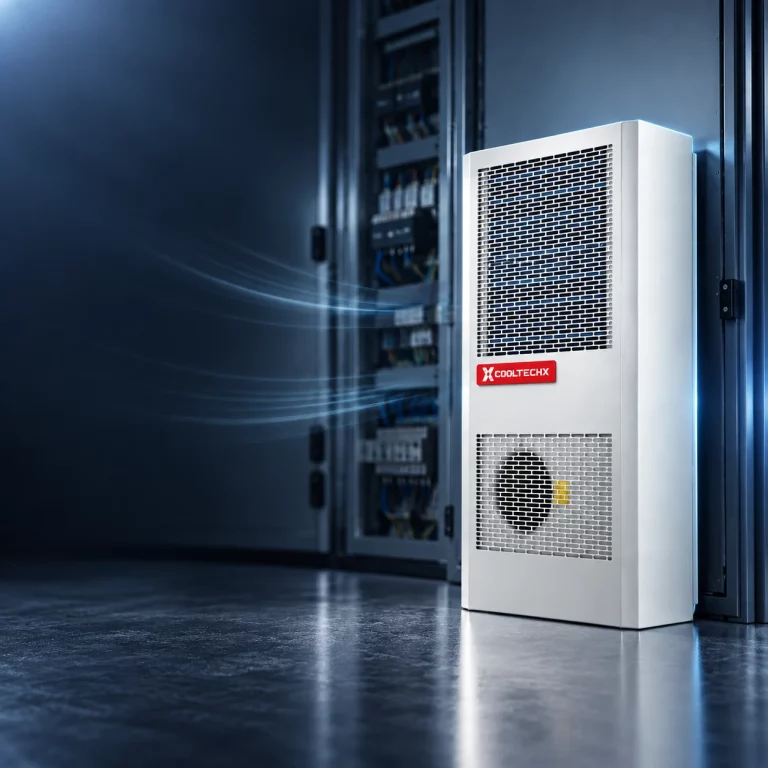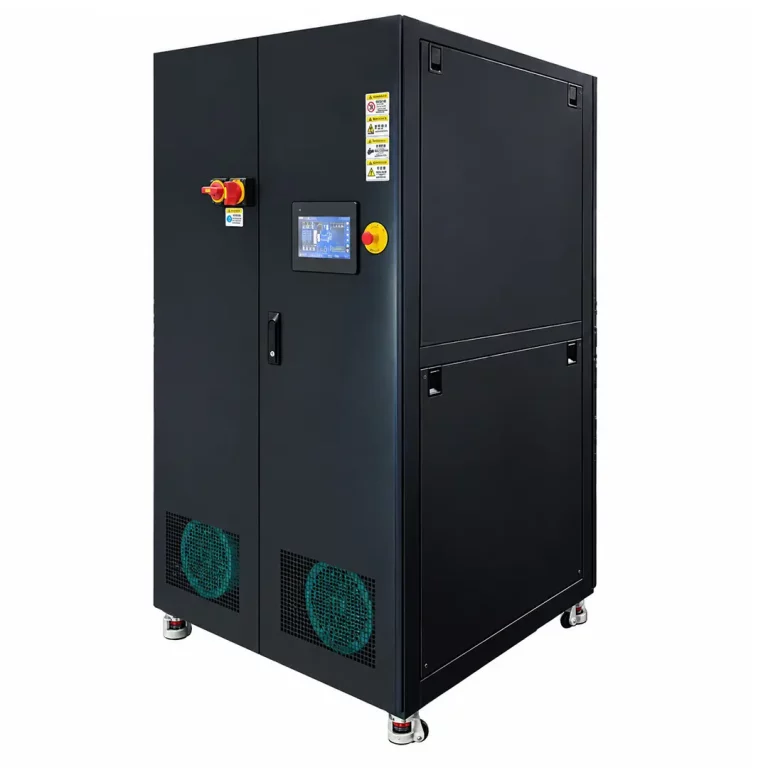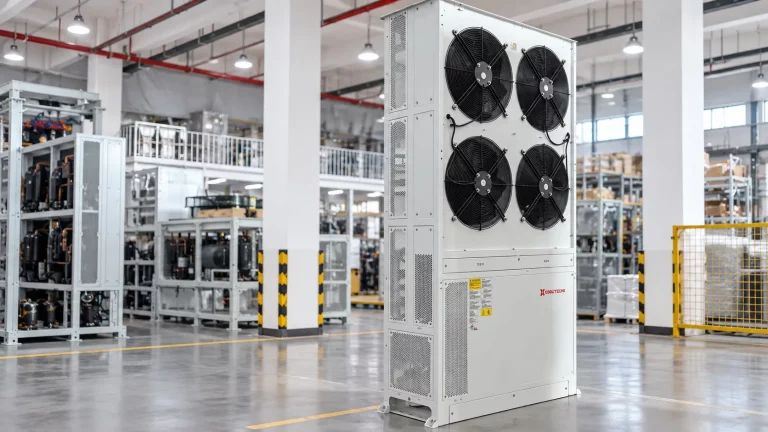

When an electrical enclosure runs hotter than expected, replacing the air conditioner is rarely the first useful step. The practical starting point is to confirm the heat load, the highest ambient condition, the available airflow path and the enclosure boundary. These checks help engineering and procurement teams describe the application clearly before requesting a cabinet-cooling recommendation.
This guide is for control panels, electrical cabinets, automation enclosures and outdoor equipment cabinets. It is not a substitute for a thermal calculation or site inspection; its purpose is to make the first technical discussion more precise.
1. Confirm the heat generated inside the enclosure
Begin with the components that operate inside the cabinet: drives, power supplies, PLCs, transformers, contactors, communication equipment and any other electronic load. Their electrical input rating is not automatically the heat released into the enclosure, so use verified equipment-loss data where it is available. If a full loss breakdown is not yet available, record the equipment list, operating duty and expected simultaneous load rather than guessing a cooling capacity.
Also note whether the heat is continuous, cyclic or linked to a specific production state. A cabinet that is acceptable during low load can still overheat during a short high-load period. For a structured way to turn these inputs into an initial cooling-capacity discussion, see How to Size a Cabinet Air Conditioner.
2. Use the highest real ambient condition, not the annual average
The temperature around an enclosure directly affects the cooling duty. Record where the cabinet is installed: a conditioned room, a factory floor, a roof, a telecom shelter or an outdoor equipment site. Then capture the highest expected ambient temperature at the cabinet itself. Direct sunlight, nearby machinery, a poorly ventilated room and recirculated condenser air can make that local condition materially different from a weather-station average.
For outdoor installations, include solar exposure, rainfall, dust and whether the condenser side has enough clear space. These facts do not determine a product on their own, but they prevent a quotation from being based on the wrong operating boundary. If the enclosure is exposed to outdoor conditions, review the current Outdoor Enclosure Air Conditioners range after the site inputs are confirmed.
3. Check the airflow path around the cabinet and cooling unit
An air conditioner can only reject heat effectively when its inlet and outlet sides remain clear. Look for blocked grilles, insufficient clearance to walls, adjacent cabinets exhausting warm air toward the unit, or an installation position that encourages the same hot air to circulate back to the condenser. Inside the enclosure, check whether cable bundles, component placement or internal partitions stop conditioned air from reaching the heat sources.
Airflow is also a reliability issue: a fan may be running while the actual heat-producing components receive little air. During a review, record the unit mounting position, the direction of air discharge and any physical obstruction. A photo showing the cabinet surroundings and the interior layout is often more useful than a brief description alone.
4. Inspect the enclosure boundary before treating it as a cooling-capacity problem
Door seals, cable entries, unsealed cut-outs and frequently opened access panels can allow warm, humid or dusty air into the enclosure. This may add heat and contamination that the original cooling arrangement was not intended to handle. Check whether the enclosure is still closed during normal operation and whether later modifications changed the original airflow or ingress-protection boundary.
Do not assume that a larger unit is the best response to a leaky or poorly arranged enclosure. First identify the source of unwanted air entry and clarify the required environmental protection level for the application. This makes the next selection conversation more accurate and avoids solving one issue while leaving the underlying installation condition unchanged.
5. Separate a cooling problem from a control or maintenance problem
Before changing equipment, confirm the observable facts: alarm history, measured enclosure temperature, ambient temperature, compressor or fan operating state, filter condition and whether the controller setpoint is appropriate for the equipment inside. Document when the issue occurs and whether it affects one cabinet or several similar installations. This helps distinguish a system-wide application issue from a component, controller or maintenance issue.
Where electrical safety procedures allow, retain the available alarms and measurements for the technical review. Do not bypass protective functions or open energized equipment solely to obtain troubleshooting information.
What to prepare for a cabinet-cooling inquiry
A useful inquiry does not need a perfect thermal model on day one. The following information is enough to begin a focused discussion:
- Cabinet dimensions, installation location and mounting constraints;
- Equipment list and known internal heat-loss data;
- Highest expected ambient condition at the cabinet;
- Photos of the exterior clearances and internal component layout;
- Required power supply, protection level and communication needs, if applicable;
- Whether the cabinet is indoor, outdoor, telecom-related or part of an industrial control system.
Move from checks to the right selection path
Once the basic conditions are clear, use the appropriate selection route rather than treating all enclosures as identical. For control panels and industrial automation applications, read How to Choose Panel Cooling Systems: 6 Environmental Factors That Matter. For the current full range of enclosure-cooling options, visit Cabinet Air Conditioners.
If you are preparing a project, contact Cooltechx with the enclosure data and site photos. The goal is to evaluate the application boundary first, then discuss a suitable cooling configuration.