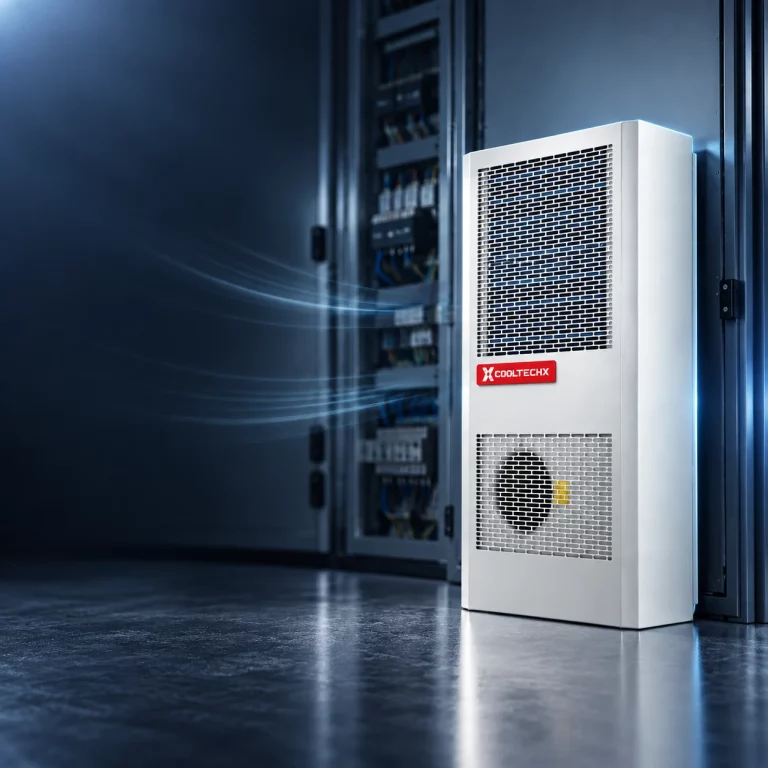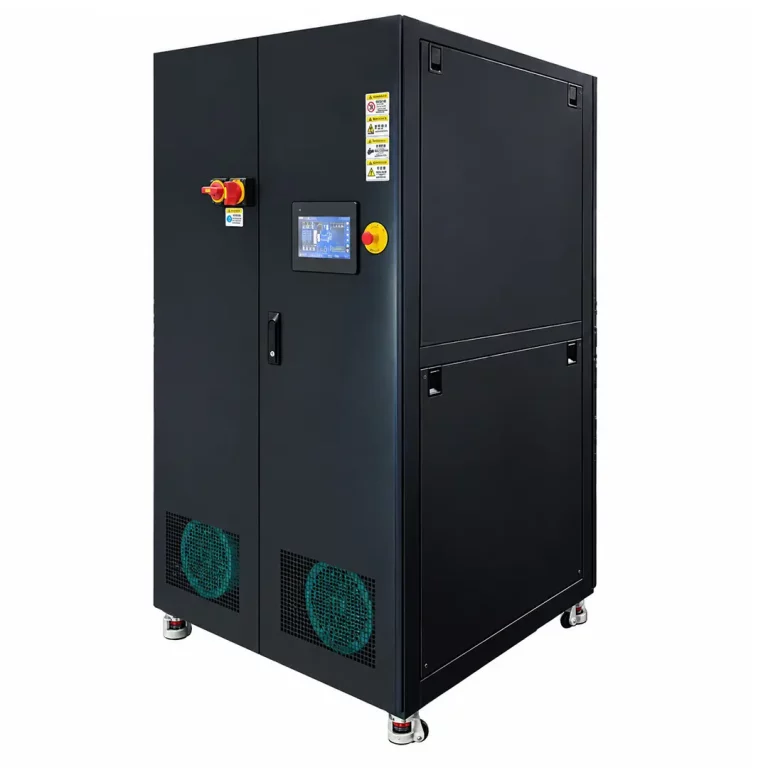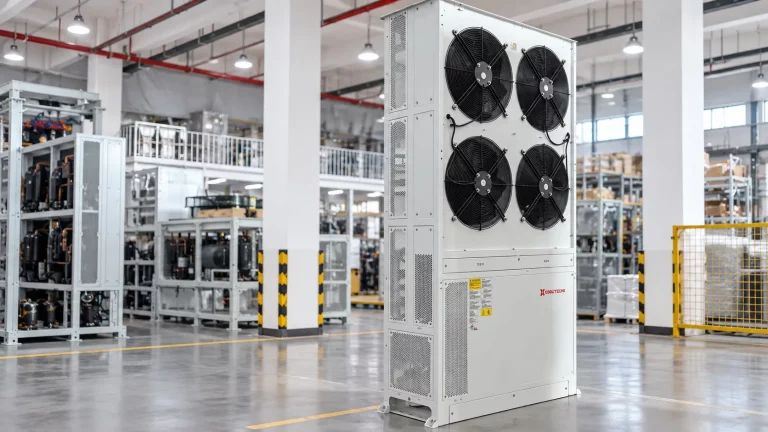

Hot, dusty and high-solar-load locations make thermal management an early engineering decision for a battery energy storage system (BESS). The right cooling approach depends on the battery configuration, heat load, site environment, enclosure design and the operating conditions defined by the project—not on a single capacity number or a generic “desert-ready” claim.
This guide sets out the inputs a procurement or engineering team should prepare when evaluating energy storage cooling systems for projects in the Middle East and other demanding climates.
Why hot-climate BESS cooling needs project-specific selection
During charging and discharging, a battery system creates heat that must be considered alongside the heat entering from its surroundings. In a hot outdoor location, the cooling system may also need to reject heat while ambient conditions, solar exposure and airborne dust put additional demands on the installation.
For that reason, a useful cooling enquiry defines more than the required capacity. It also explains where the unit will operate, how the battery system is arranged, which utility connections are available and how the system will be maintained. This gives the supplier and project team a common basis for comparing options.
Air cooling and liquid cooling: start with the system boundary
Air-cooled and liquid-cooled designs solve different integration problems. An air-cooling solution manages the air inside the battery enclosure or container. A liquid-cooling solution is evaluated together with the battery thermal loop, including the required fluid path, interfaces and controls. Neither approach is automatically right for every BESS project.
| Selection question | Why it matters |
|---|---|
| How are the battery racks or modules arranged? | The physical layout affects airflow paths, service access and liquid-loop routing. |
| What is the expected heat load at the stated operating condition? | Cooling capacity can only be compared when its rating conditions are also known. |
| How severe is the site environment? | Ambient temperature, dust, solar exposure, humidity and altitude influence enclosure and heat-rejection design. |
| What interfaces are already specified? | Power supply, communications, alarms, piping and control requirements can change the suitable configuration. |
| How will the system be serviced? | Access, cleaning, fluid maintenance and spare-parts planning should match the project’s operating model. |
For a fuller technology comparison before selecting a system architecture, see BESS Air Cooling vs Liquid Cooling: Which Is Best?. The article explains the decision boundary; this page focuses on the project information needed for a hot-climate RFQ.
Project inputs to prepare before requesting a BESS cooling quotation
A practical RFQ should include the following information where available:
- BESS configuration: battery capacity, rack or module arrangement, container or cabinet dimensions, and available installation space.
- Thermal requirement: required cooling duty and the operating condition used to state it, plus any target temperature range supplied by the battery-system designer.
- Site conditions: project location, maximum and minimum ambient conditions, dust exposure, solar exposure, altitude and any relevant installation restrictions.
- Utilities and interfaces: available input power, control/communication requirements, alarm integration and, for liquid cooling, the required fluid and pipe interfaces.
- Operation and maintenance: service access, maintenance intervals expected by the owner, spares strategy and commissioning responsibilities.
- Compliance documentation: the standards, test documents or customer specifications that the project actually requires.
This input list helps prevent an early quotation from comparing unlike conditions. For example, two cooling capacities should not be treated as interchangeable unless the stated test or rating conditions are comparable. Read Why L45/W18°C Test Conditions Matter for BESS Liquid Cooling Capacity for a practical explanation of this point.
Design considerations for dust, sunlight and service access
In dusty regions, cooling performance over time depends on how the enclosure, air path and service plan deal with airborne particles. The project team should identify the intended installation location and cleaning access rather than assuming that a generic environmental label answers every site question.
Solar exposure and the layout of an outdoor container can add heat to the overall system. These conditions should be shared with the cooling supplier together with the battery-system layout. The goal is to evaluate the complete installation: cooling equipment, enclosure, battery arrangement, utilities and controls.
Where a liquid loop is being considered, define responsibility for the interfaces between the thermal-management unit and battery system. The choice between a single or dual circuit is an architecture decision that should be made against the project’s integration and maintenance requirements. See Single vs Dual-Circuit BESS Liquid Cooling for the questions to resolve with the system designer.
Move from a generic enquiry to a comparable proposal
Once the project inputs are clear, teams evaluating liquid-loop solutions can review the currently available energy storage liquid cooling systems as a starting point for capacity range and configuration discussion. Final selection should always be confirmed against the documented requirements of the exact battery system and project.
Discuss a BESS cooling requirement
Send your battery layout, site conditions, requested cooling duty, utility information and interface requirements to our team. We can use those inputs to discuss a configuration that fits the documented project boundary. Contact Cooltechx to discuss your BESS cooling project.