

The energy storage industry is at an inflection point. As grid-scale battery deployments accelerate across Europe and beyond, one challenge keeps rising to the top of engineering agendas: heat.
This week, the CooltechX team is on the ground in Munich for The smarter E Europe 2026 (June 23–25, Messe München) — Europe’s largest alliance of exhibitions for the energy industry, and one of the most important events on the global energy calendar. We’re looking forward to connecting with the innovators, engineers, and decision-makers converging on Munich this week, and to being part of the conversations shaping the industry’s next chapter.
What Is The smarter E Europe 2026?
The smarter E Europe is the umbrella event that brings together four major co-located exhibitions under one roof at Messe München:
- EES Europe — Europe’s largest exhibition for batteries and energy storage systems, covering the full spectrum of stationary storage technologies from residential to utility scale
- Intersolar Europe — The world’s leading exhibition for the solar industry, focused on photovoltaics, solar thermal, and grid integration
- Power2Drive Europe — The international exhibition for EV charging infrastructure and e-mobility
- EM-Power Europe — The international exhibition for energy management and integrated energy solutions
Together under the motto “Accelerating Integrated Energy Solutions,” these four shows reflect a clear industry direction: the future of energy isn’t about isolated technologies — it’s about how solar generation, battery storage, EV charging, and intelligent energy management work together as a single, integrated system.
For CooltechX, EES Europe is our primary focus — but the themes running through all four exhibitions are deeply interconnected with what we do. Battery cooling is as relevant to EV charging infrastructure as it is to grid-scale storage. Thermal management is a factor wherever energy is stored at scale.
The Thermal Challenge in Modern Battery Energy Storage
Battery cells are sensitive to temperature. Operate them too hot, and you accelerate degradation, reduce cycle life, and — in worst cases — risk thermal runaway. Operate them too cold, and you limit usable capacity and charge acceptance.
For a utility-scale BESS project running thousands of cells in parallel, this isn’t just an engineering nuance. It’s a fundamental constraint that determines:
- System lifespan — How many cycles the battery delivers before capacity falls below acceptable thresholds
- Usable capacity — The percentage of installed capacity that’s actually accessible under real operating conditions
- Safety margins — The thermal headroom between normal operation and failure modes
- Round-trip efficiency — How much energy is lost to heat management versus recovered as usable power
As energy density increases and charge/discharge rates push higher to meet grid demands, the thermal load on battery systems grows accordingly. Getting thermal management right is no longer a secondary consideration — it’s a primary design requirement.
Key Trends in Energy Storage Cooling
1. Active Cooling Becoming Standard
Early utility-scale BESS projects often relied on passive or minimal active cooling. As cell energy density has risen and duty cycles have intensified, active cooling — using refrigerant circuits, precision air handling, or liquid cooling loops — has become the industry baseline for serious deployments.
2. Liquid Cooling for High-Density Applications
Liquid-cooled battery modules are gaining ground, particularly in high-power applications where air cooling struggles to extract heat fast enough. Direct liquid cooling and indirect liquid cooling via cold plates each have their place depending on cell chemistry, rack architecture, and duty cycle requirements.
3. Precision Temperature Uniformity
It’s not just about keeping batteries cool — it’s about keeping them uniformly cool. A temperature gradient of just a few degrees across a battery module leads to uneven aging, which gradually reduces the effective capacity of the entire string. State-of-the-art thermal management targets tight temperature uniformity across all cells, extending system life and protecting revenue.
4. Integration with BMS and EMS
The most sophisticated BESS thermal systems today operate in close coordination with the Battery Management System (BMS) and Energy Management System (EMS). Cooling intensity is dynamically adjusted based on state of charge, charge/discharge rate, ambient conditions, and predictive models — reducing parasitic energy consumption while maintaining ideal operating temperatures.
5. Containerized and Modular Deployments
The rapid growth of containerized BESS has driven demand for purpose-built thermal solutions that fit within constrained envelopes, integrate easily with prefabricated modules, and perform reliably across a wide range of climatic conditions — from desert heat to alpine winters.
Why The smarter E Europe Is the Right Place for This Conversation
What makes events like EES Europe, Intersolar Europe, Power2Drive Europe, and EM-Power Europe so valuable is that they bring the full energy ecosystem into one place.
The intersection matters. A solar developer planning a hybrid PV+BESS project needs to understand storage cooling requirements before the batteries are specified. An EV charging operator scaling up high-power charging hubs faces exactly the same thermal management questions as a grid-scale storage integrator. An energy manager designing a building microgrid needs to account for battery thermal behavior in their optimization algorithms.
These conversations happen when the right people are in the same building. That’s why Munich in June is such a productive week for the industry — and for us.
How CooltechX Approaches BESS Thermal Management
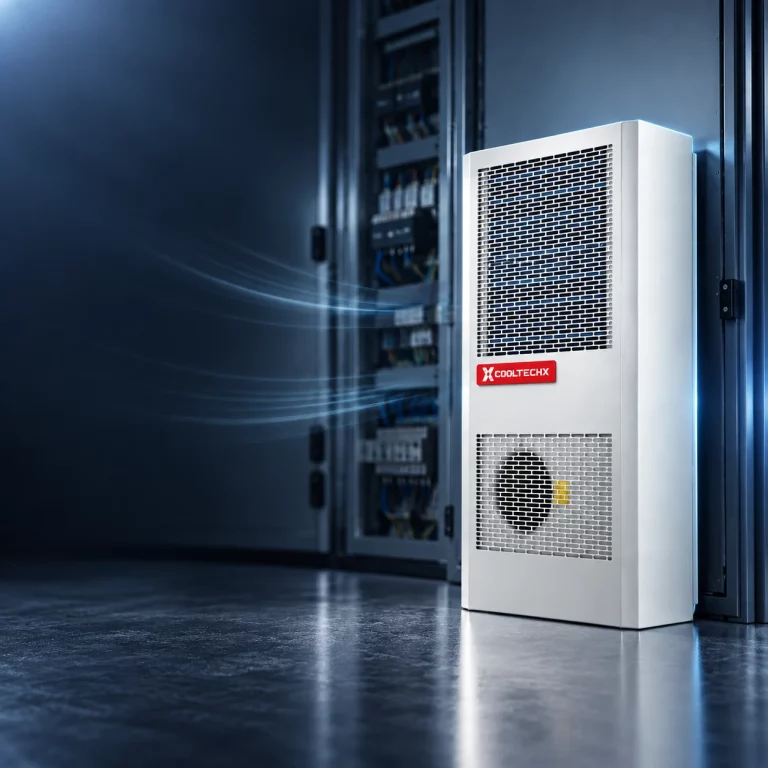
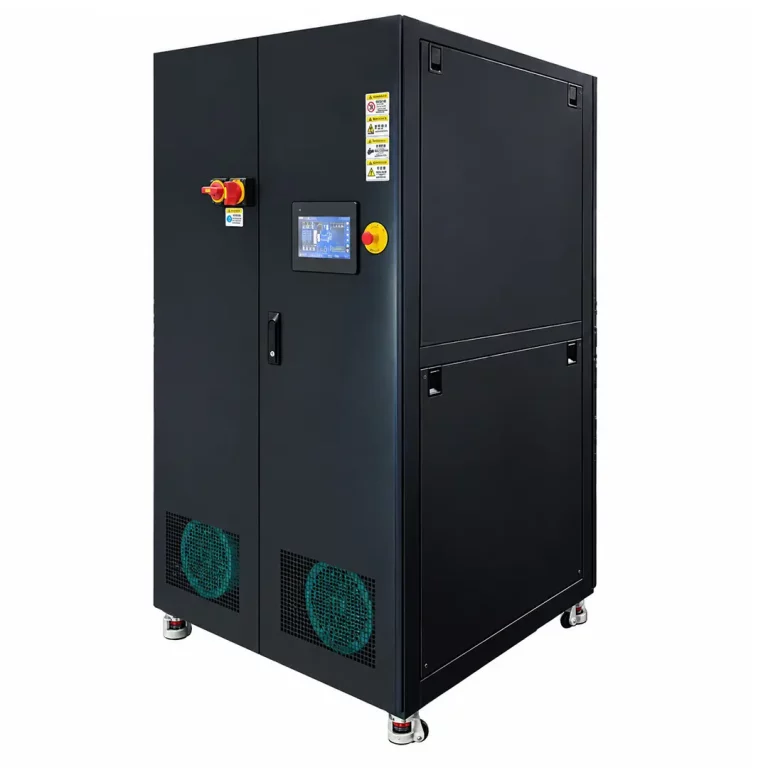
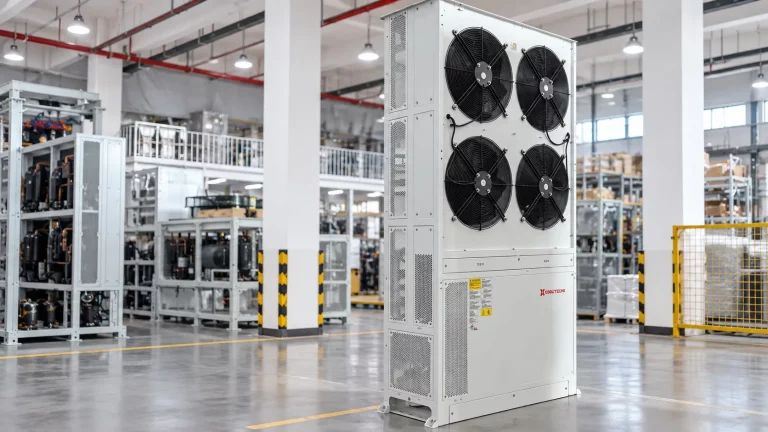
At CooltechX, we design and deliver precision cooling solutions purpose-built for energy storage applications. Our systems are engineered around three core principles:
Thermal precision. We target tight temperature uniformity across battery modules — not just adequate cooling, but consistent, controlled thermal conditions that protect cell chemistry and maximize cycle life.
System integration. Our cooling units are designed to integrate cleanly with containerized BESS architectures, working alongside existing BMS and EMS infrastructure rather than operating in isolation.
Reliability at scale. Energy storage assets are expected to operate for 15–20 years with minimal downtime. Our thermal systems are built to match that expectation — with robust components, redundancy where it matters, and remote monitoring capabilities for long-term asset management.
From compact rack-mounted coolers to large-scale containerized thermal management systems, our product range covers the full spectrum of energy storage cooling requirements.
Meet the CooltechX Team at The smarter E Europe 2026
The CooltechX team is in Munich from June 23–25 for The smarter E Europe 2026. Whether you’re at EES Europe, Intersolar Europe, Power2Drive Europe, or EM-Power Europe — if thermal management for energy storage is on your agenda, we want to connect.
Reach out ahead of the show to schedule a conversation:
The energy storage industry is moving fast. The conversations happening in Munich this week will shape the projects that come online over the next several years. We’re looking forward to being part of them.
The Bottom Line
Thermal management isn’t a commodity add-on to a battery energy storage system — it’s one of the core determinants of whether that system delivers on its promised performance, lifespan, and safety profile. As the industry scales and the stakes grow higher, the quality of the thermal solution matters more, not less.
The smarter E Europe 2026 — and EES Europe at its heart — is where the industry gathers to address exactly these kinds of challenges. If you’re there, let’s talk.
CooltechX specializes in precision cooling solutions for energy storage systems. For inquiries, contact us at [email protected].