
Introduction: The Critical Role of Thermal Management in Energy Storage
As the global energy landscape undergoes a dramatic transformation toward renewable sources and grid-scale storage solutions, the importance of effective thermal management has never been more critical. Battery Energy Storage Systems (BESS) represent a cornerstone of this energy transition, enabling utilities and commercial operators to store excess energy generated from solar and wind sources for use during peak demand periods or when renewable generation is low.
However, the performance, safety, and longevity of these energy storage systems depend heavily on one often-overlooked factor: thermal management. Without proper cooling solutions, battery systems can suffer from thermal runaway, reduced capacity, shortened lifespans, and in extreme cases, safety hazards. This article explores comprehensive thermal management solutions deployed across diverse global markets, demonstrating how advanced cooling technologies are enabling the energy storage revolution.
Understanding the Thermal Challenges in Modern BESS
Modern energy storage systems face increasingly complex thermal challenges. As battery technology advances and energy densities increase, the amount of heat generated within compact spaces grows significantly. A typical commercial BESS installation, ranging from 261kWh to several megawatt-hours, generates substantial thermal loads that must be managed effectively to maintain optimal operating temperatures.
The challenges are further compounded by varying environmental conditions across different geographic regions. Systems deployed in the scorching heat of the Middle East face entirely different thermal management requirements compared to those installed in the variable climates of Europe or the humid tropical environments of Southeast Asia. Each application demands a tailored approach to cooling that considers local climate conditions, regulatory requirements, and operational parameters.
Key Thermal Management Requirements
- Temperature Uniformity: Maintaining consistent temperatures across all battery modules to prevent hotspots and ensure balanced performance
- Energy Efficiency: Minimizing the power consumption of cooling systems to maintain overall system efficiency
- Reliability: Ensuring continuous 24/7 operation with minimal maintenance requirements
- Environmental Adaptability: Operating effectively across wide temperature ranges and challenging environmental conditions
- Safety Compliance: Meeting stringent safety standards and environmental regulations in different markets
Case Study: High-Capacity Liquid Cooling for Grid-Scale Applications
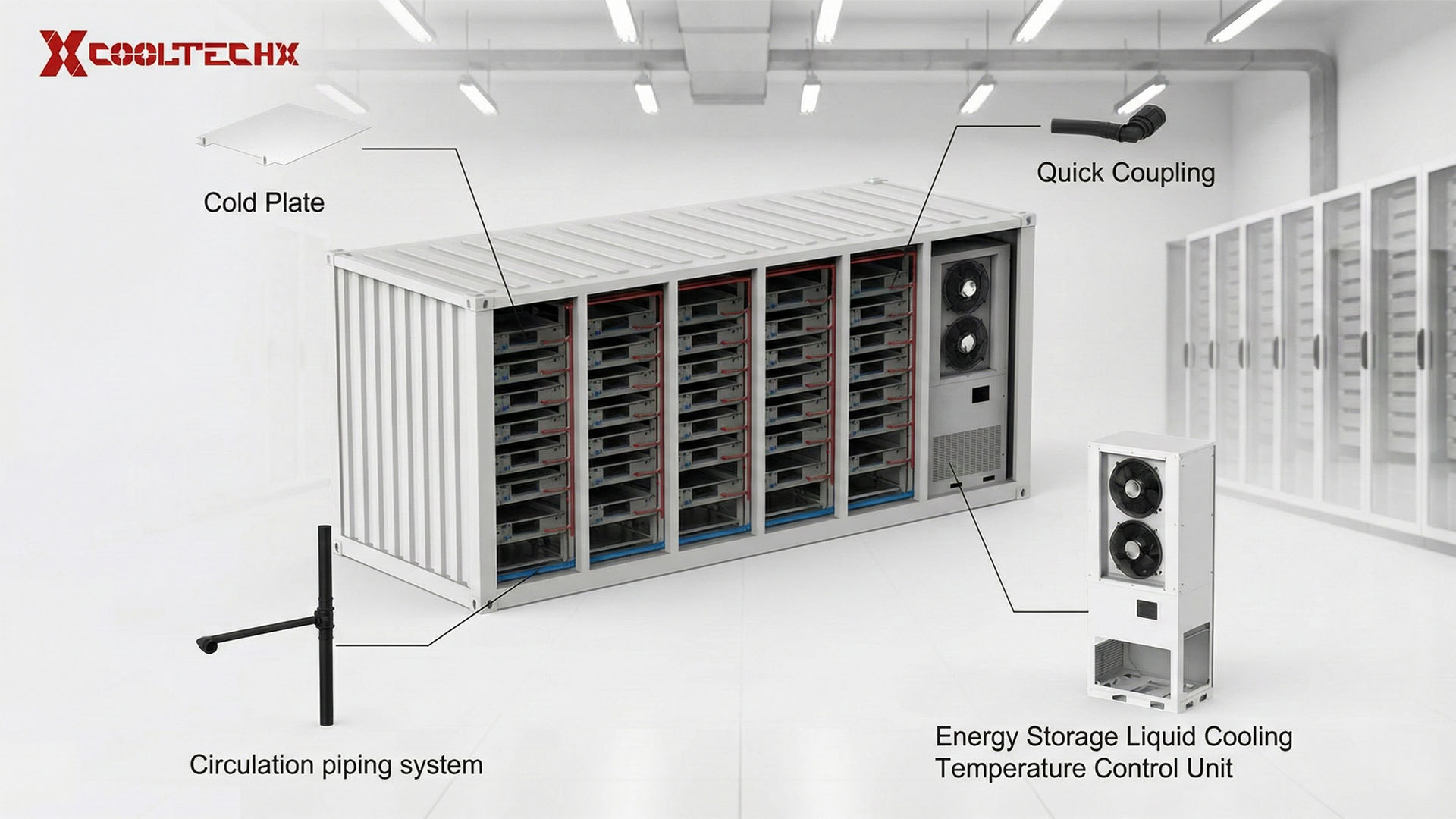
In large-scale energy storage deployments, such as 2MWh to 5MWh systems, the thermal management requirements are particularly demanding. These grid-scale installations require sophisticated cooling infrastructure capable of handling significant thermal loads while maintaining precise temperature control across hundreds or thousands of battery modules.
Recent deployments in the Indian market demonstrate the effectiveness of 7.5kW liquid cooling systems combined with strategically designed air outlet configurations. These systems are engineered to maintain precise and uniform temperature control, minimizing thermal stress on batteries and ensuring high energy efficiency. The intelligent cooling design minimizes electricity consumption while maintaining performance, achieving continuous and reliable performance in challenging ambient conditions typical of the South Asian climate.
For even larger 5MWh installations, comprehensive liquid cooling piping solutions provide the infrastructure necessary for effective thermal management. These systems feature optimized pipe layouts designed to minimize pressure drop and ensure uniform coolant flow across all battery modules. High-performance heat exchangers integrated with the piping system efficiently dissipate heat from the coolant to the environment, while modular connections enable easy assembly and future scalability.
Technical Specifications of Large-Scale Solutions
- Cooling Capacity: 7.5kW to 60kW configurations depending on system size
- Temperature Control Precision: ±1°C accuracy across all battery modules
- Flow Management: Optimized piping layouts with integrated monitoring systems
- Scalability: Modular designs supporting future expansion
- Safety Features: Leak-proof designs with high-quality materials and precision fabrication
Commercial and Industrial Applications: The 261kWh BESS Market
The commercial and industrial (C&I) energy storage segment, typically centered around 261kWh systems, represents one of the fastest-growing markets for thermal management solutions. These systems serve businesses seeking to reduce peak demand charges, provide backup power, and integrate renewable energy sources into their operations.
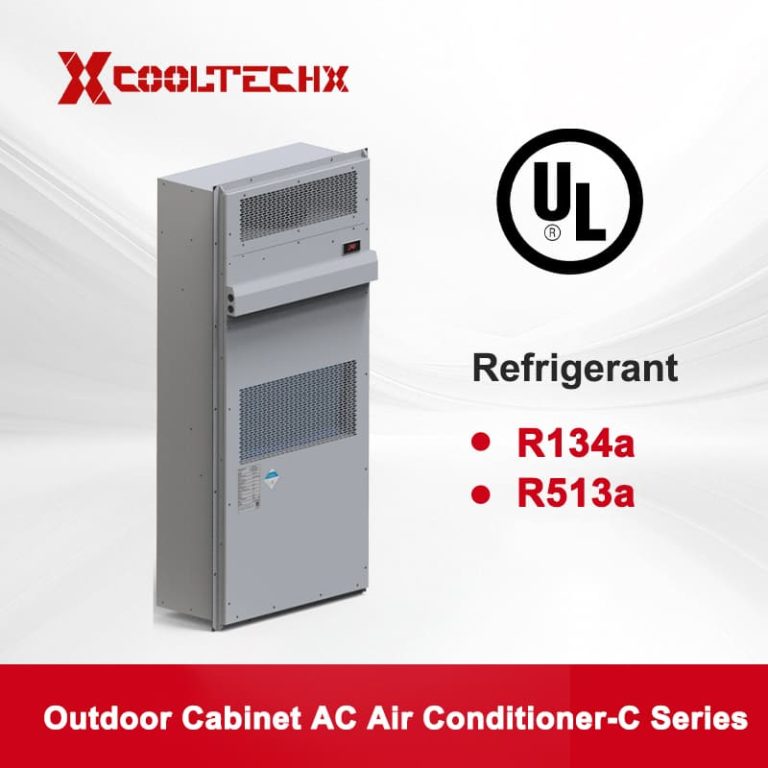
In the European market, particularly Germany, stringent regulatory standards and variable climate conditions create unique requirements for thermal management systems. Deployments in this region utilize CE-certified industrial cabinet air conditioning systems featuring environmentally friendly R-513A refrigerant compliant with EU environmental standards. These systems incorporate high-efficiency compressor technology for energy-saving operation and RS485 communication capability for remote monitoring and intelligent control.
The success of these deployments is measured not only in technical performance but in long-term business relationships. Systems that demonstrate stable performance under real operating conditions have led to ongoing monthly orders, establishing sustainable partnerships between technology providers and energy storage system integrators.
Addressing Extreme Environments: Middle East and Tropical Applications
Industrial equipment operating in the Middle East faces some of the most challenging environmental conditions on Earth. Extreme ambient temperatures, strong solar radiation, and demanding continuous operation requirements place extraordinary demands on cooling systems. Successful deployments in Bahrain, Dubai, and throughout the region demonstrate the capability of specialized cooling solutions to operate reliably under these harsh conditions.
Industrial air conditioning systems designed for these environments feature high cooling capacity optimized for high ambient temperatures, durable construction ensuring long service life, and 24/7 continuous operation capability. These systems protect critical industrial equipment from overheating, improve system reliability, and reduce maintenance risks in harsh environmental conditions.
Similarly, Southeast Asian markets present unique challenges with high humidity and consistent tropical heat. Deployments in Thailand utilize indoor air conditioning units featuring advanced dehumidification systems specifically designed for high-humidity environments. These units incorporate intelligent digital controllers for precise temperature management and easy maintenance designs that minimize downtime for factory operators.
Environmental Adaptation Features
- High-Ambient Operation: Systems rated for continuous operation at ambient temperatures exceeding 45°C
- Humidity Management: Integrated dehumidification and condensation control systems
- Dust and Debris Protection: IP56 protection levels suitable for harsh outdoor environments
- Corrosion Resistance: Specialized coatings and materials for coastal and industrial environments
Innovation in Compact Solutions: The 3kW to 6kW Range
Not all energy storage applications require massive cooling capacity. For smaller commercial installations and compact cabinet designs, innovative 3kW to 6kW cooling solutions provide efficient thermal management while minimizing space requirements. These systems are particularly valuable in applications where cabinet space is limited but cooling performance cannot be compromised.
Top air outlet cooling designs represent a significant innovation in this category. By optimizing airflow design for uniform temperature distribution and utilizing top outlet configurations that improve heat removal efficiency, these systems address the specific challenges of compact energy storage installations. The compact structure allows for easy installation and maintenance while delivering reliable operation in high ambient temperatures.
These smaller capacity systems are particularly well-suited for distributed energy storage applications, microgrids, and commercial installations where space efficiency and cost-effectiveness are primary concerns. Despite their compact size, these systems incorporate the same advanced control and monitoring capabilities as their larger counterparts, ensuring reliable operation and easy integration with building management systems.
The Future of Energy Storage Thermal Management
As energy storage systems continue to scale and evolve, thermal management technologies must advance in parallel. The industry is seeing several key trends that will shape the future of cooling solutions:
Integration with Energy Management Systems: Future cooling solutions will increasingly integrate with broader energy management platforms, enabling intelligent operation that optimizes cooling based on predicted load patterns, weather forecasts, and energy pricing signals.
Advanced Refrigerants: Environmental regulations continue to drive the adoption of low-global-warming-potential refrigerants. The transition to alternatives like R-513A represents just the beginning of this evolution, with ongoing research into even more sustainable cooling technologies.
Predictive Maintenance: IoT sensors and advanced analytics will enable predictive maintenance approaches that identify potential issues before they impact system performance, reducing downtime and maintenance costs.
Modular and Scalable Designs: As energy storage projects grow in size and complexity, thermal management systems must offer modular designs that can scale alongside battery installations, enabling phased deployments and future expansion.
Conclusion
The global energy storage market’s rapid growth is inextricably linked to the advancement of thermal management technologies. From compact 3kW units for commercial applications to comprehensive liquid cooling infrastructure for grid-scale deployments, effective thermal management enables the safe, efficient, and reliable operation of battery energy storage systems across diverse applications and environments.
As demonstrated by successful deployments across South Asia, Europe, the Middle East, and Southeast Asia, modern cooling solutions can meet the demanding requirements of today’s energy storage applications while adapting to local climate conditions and regulatory requirements. These technologies represent a critical enabling factor in the global transition to renewable energy and sustainable power systems.
Looking forward, continued innovation in thermal management will be essential as energy storage systems become larger, more sophisticated, and more deeply integrated into the global energy infrastructure. The companies leading this innovation will play a crucial role in shaping the future of sustainable energy.